

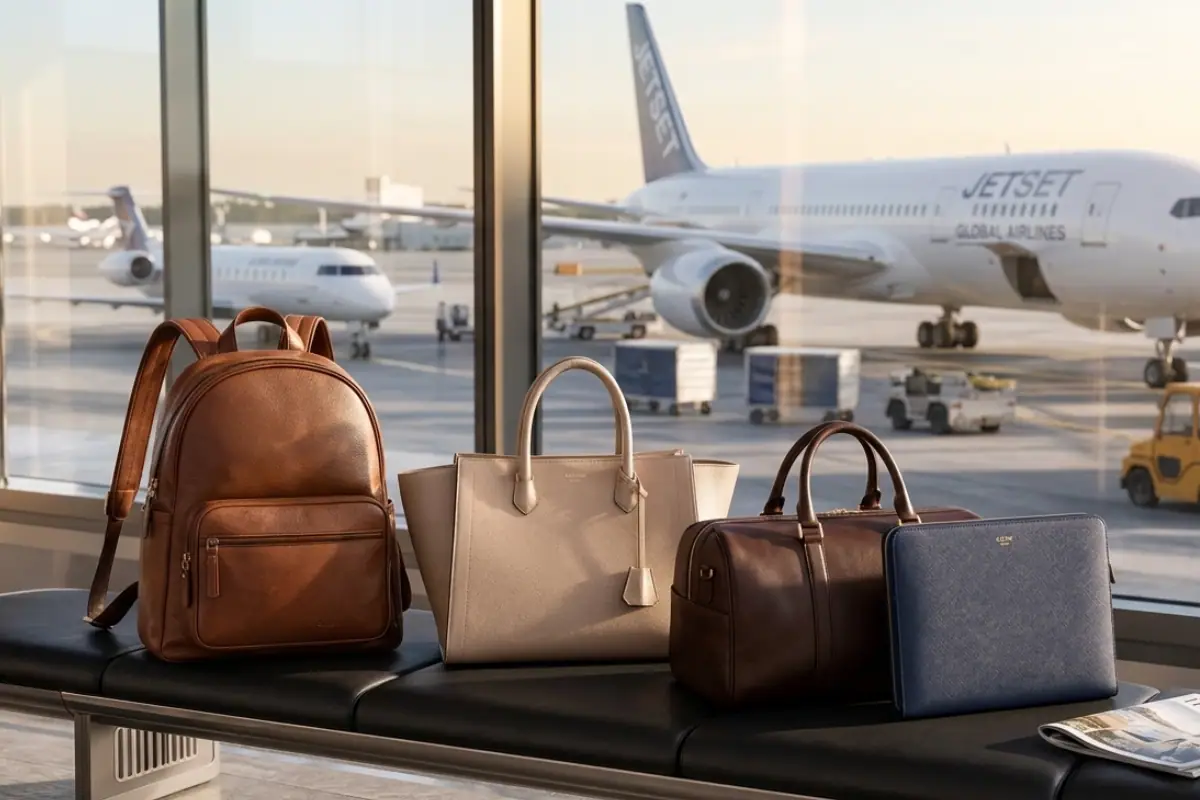
Choosing between a backpack and a handbag for flights isn’t just about style — it can seriously impact your comfort, in-flight convenience, and even whether you end up paying extra baggage fees.
In this guide, we’ll compare the best personal items for flights based on real travel scenarios, airline size rules, and practical packing efficiency — so you can walk to that gate with zero second-guessing.
Now, here’s the thing about that decision. You’re standing in the check-in line. Your carry-on is overhead-bin-ready. But tucked under the seat in front of you — that’s where the real choice lives.
I’ve logged well over 200 flights in the last decade, from weekend hops to 16-hour international hauls. I’ve made both choices and both mistakes. This guide breaks it all down so you can pick what actually works for your travel style.
Backpack vs Handbag for Flights: Quick Answer
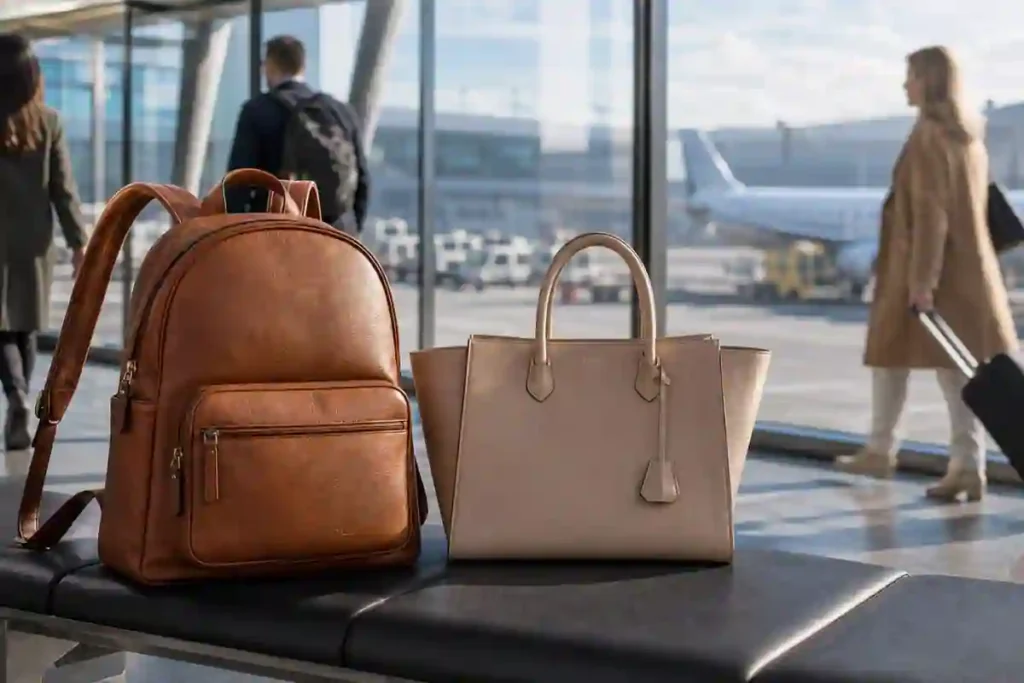
A backpack is usually the best personal item for flights because it offers more storage space, better comfort during long airport days, and fits airline personal item size limits more easily. A handbag is better for short trips, business travel, and quick in-flight access to your essentials.
Still not sure which one fits your trip? Keep reading — we break down every scenario below.
What Even Is a “Personal Item”?
Before we dive in — let’s get clear on what we’re actually talking about.
When you fly, most airlines allow two bags:
- A carry-on — es in the overhead bin (roller suitcase, large duffel)
- A personal item — goes under the seat in front of you
Your personal item is your in-flight lifeline. It’s what you reach into for your phone charger, snacks, headphones, meds, and passport.
The difference between a carry-on and a personal item matters more than most people think — especially on budget carriers, where overhead bin space costs extra.
Most airlines cap personal items at around 18 x 14 x 8 inches, though this varies by carrier. More on that in the airline size rules section.
The big question: what shape should that personal item be — and does the choice help you avoid baggage fees?
Backpack as a Personal Item for Flights
Why Travelers Love It
A backpack is the most popular personal item choice among frequent flyers — and with good reason.
More space than almost any other bag. Even a slim 20-liter daypack holds far more than the average tote or purse. Laptop, a change of clothes, toiletries, snacks, a water bottle, travel docs — a well-chosen backpack handles it all. This is the #1 reason backpacks help travelers avoid baggage fees: they eliminate the need for a carry-on.
Two hands are completely free. Navigating a busy terminal, rolling your carry-on, holding coffee, and flashing your boarding pass is a whole lot easier when your bag is on your back—not hanging off one shoulder.
Fits under the seat — when packed right. A slim travel backpack slides under the seat cleanly. The key is choosing a dedicated travel pack, not an overstuffed hiking bag.
Comfort on long airport days. Three-hour layover with a terminal hike? A flight delay that has you wandering for hours? A backpack distributed across both shoulders beats a handbag dangling off one arm every single time.
The Downsides of a Backpack
Mid-flight access is awkward. Once you’re buckled in and the bag is under the seat, reaching in requires unbuckling, leaning over, and fishing around in the dark. Not great on a packed red-eye.
Slower at security. Laptops often need to come out. Liquids have to be pulled. Multiple compartments mean more unpacking at the TSA bin — especially if you’re not organized going in.
Gate agents sometimes push back. On packed flights, a bulky-looking backpack might get flagged for overhead stowage, which defeats the whole “under the seat” advantage.
Can clash with business travel. A technical-looking daypack doesn’t exactly scream “boardroom ready.” Know your context.
Handbag as a Personal Item for Flights
Why Travelers Love It
Whether it’s a structured tote, a crossbody, a leather satchel, or a large purse — a handbag brings real advantages to the flying experience.
Unbeatable in-flight access. This is where a handbag wins, no contest. It sits on your lap or at your feet, and you can grab what you need without ever unbuckling. Lip balm, AirPods, your phone, a snack — one smooth reach.
Polished and professional. Flying for a meeting? Attending a wedding at your destination? A structured handbag or leather tote looks intentional. First impressions start at the airport.
Faster through security. Handbags with minimal tech content often breeze through the TSA line without the “please remove your laptop” routine.
Easier to manage in tight spaces. Narrow boarding aisles, middle-seat shuffle, cramped lavatories — a shoulder bag takes up less space than wearing a backpack.
The Downsides of a Handbag
Limited capacity. This is the deal-breaker for many trips. A handbag that fits within airline personal item size limits simply doesn’t hold as much as a comparably sized backpack. You need to be strategic about what you bring.
Shoulder and neck strain. Carrying a heavy one-sided bag through a large airport — think LAX or O’Hare — is genuinely hard on your body. Your back and neck will remind you by hour two.
An organization can fall apart fast. Without designated pockets and compartments, your handbag becomes a black hole—keys, charging cables, snacks — all swallowed whole.
Trickier to size accurately. A slouchy tote doesn’t hold its shape, making it hard to know whether it actually meets airline personal item size limits. Overstuffed, it may not fit.
Head-to-Head: Backpack vs Handbag for Flights
| Category | Backpack | Handbag |
|---|---|---|
| Storage Capacity | ✅ More space | ❌ Limited |
| In-Flight Access | ❌ Awkward | ✅ Easy |
| Comfort (Long Airport Days) | ✅ Great | ❌ Shoulder strain |
| Looks & Style | ❌ Casual | ✅ Polished |
| TSA Security Speed | ❌ Can be slower | ✅ Generally faster |
| Organization | ✅ Multiple pockets | ⚠️ Varies |
| Fits Under Seat | ✅ Yes (if slim) | ✅ Yes |
| Hands Free | ✅ Yes | ❌ No |
| Best for Avoiding Fees | ✅ Yes | ⚠️ Sometimes |
| Business Travel | ⚠️ Style-dependent | ✅ Better fit |
| Long-Haul Flights | ✅ Better | ❌ Not ideal |
| Short Flights | ⚠️ Overkill sometimes | ✅ Perfect |
Best Scenarios for Each
Go With a Backpack If…
- You’re on a long-haul flight (4+ hours) and want snacks, entertainment, and comfort items within reach
- You want to avoid baggage fees by flying with only a personal item — no carry-on
- You’re doing a multi-city trip, and your personal item needs to double as a daypack on the ground
- You’re a solo traveler who needs both hands free at all times
- You have kids and need snacks, activities, and backup supplies within arm’s reach
Go With a Handbag If…
- It’s a short flight (under 2 hours), and you only need the bare essentials
- You’re flying for work or a formal event and need to look put-together on arrival
- You’re already checking a bag and just need a small personal item for in-flight must-haves
- You want zero fuss mid-flight — everything accessible without unbuckling
- You’re on a leisure trip, and aesthetics genuinely factor into your travel experience
Airline Personal Item Size Rules (2026)
This is where things get real — and where the wrong choice can cost you money.
Airlines vary more than you’d think on personal item dimensions. Here’s where major U.S. carriers stand heading into 2026:
| Airline | Personal Item Size Limit |
|---|---|
| Delta | 18 x 14 x 8 in |
| American Airlines | 18 x 14 x 8 in |
| United Airlines | 17 x 10 x 9 in |
| Southwest | Must fit under the seat |
| Spirit Airlines | 18 x 14 x 8 in |
| Frontier Airlines | 14 x 18 x 8 in |
| JetBlue | 17 x 13 x 8 in |
| Alaska Airlines | 17 x 13 x 6 in |
⚠️ Always verify directly with your airline before flying. These dimensions update frequently — especially on budget carriers, where gate agents enforce limits more strictly and fees for oversized bags can hit $70 or more.
Quick size tips:
- A standard 20L daypack (Osprey, Herschel, etc.) fits within most of these limits — but measure first
- A structured handbag is easier to size accurately than a slouchy tote
- When in doubt, go slimmer — a bag that’s clearly within limits means zero gate stress
Also worth reading: How carry-on vs personal item rules differ by airline — especially if you’re flying budget carriers and trying to avoid all checked bag fees.
How to Avoid Baggage Fees With the Right Personal Item
This is one of the most practical reasons the backpack vs. handbag decision for flights matters.
On budget airlines like Spirit, Frontier, and Allegiant, a carry-on bag can cost anywhere from $50 to $100+ if you add it at the gate. But your personal item always flies free — on every airline in the U.S.
Here’s how to maximize that:
1. Go carry-on free. Choose a slim backpack (20–26L) that fits within airline personal item size limits and pack everything in it: one bag, zero fees, maximum savings.
2. Know the limits cold. If your bag is even slightly oversized, you risk a gate fee that wipes out any savings. Use a soft tape measure at home before you leave.
3. Use compression cubes. A small compression packing cube can help you pack a surprising amount into a personal-item-sized backpack without exceeding size limits.
4. Wear your bulkiest items. Heavy jacket, chunky shoes, thick sweater — wear them on the plane. It clears space in your bag and saves weight.
5. Choose organization over capacity. A backpack with smart pockets and compartments actually holds more usable space than a larger bag that’s just one big pocket—every inch counts.
What to Pack in Your Personal Item
Whether you go backpack or handbag — here’s what should always ride in your personal item. Never in your checked bag, and ideally not in the overhead bin either.
Non-Negotiables
- Travel documents — passport, ID, boarding pass, any visas
- Medications — especially daily meds or anything you might need mid-flight
- Electronics — phone, earbuds, laptop, or tablet if needed
- Chargers + portable power bank — seat outlets aren’t guaranteed
- Wallet, cards, cash — never, ever check these
Comfort Items
- Lip balm and hand cream — cabin air is brutally dry
- Light scarf or travel wrap — airplane blankets aren’t always clean
- Eye mask and earplugs — life-changing on overnight flights
- A small snack — trail mix, a bar, something mess-free
Smart Additions
- A pen — customs forms on international flights are still paper
- Small reusable water bottle — fill after security
- A Ziploc for your 3-1-1 liquids if your carry-on gets gate-checked
Best Backpacks and Handbags for Personal Item Flights (2026)
Looking for the best personal item bags for flights? These options are airline-compliant, durable, and traveler-approved — no fluff, just bags that actually work.
Best Backpacks for Personal Item Flights
1. Osprey Daylite Plus (20L) Clean design, multiple compartments, padded laptop sleeve. Fits under virtually every airline seat. A consistent top choice for frequent flyers who want the best backpack for personal item flights that just works.
2. Tortuga Setout Laptop Backpack Built specifically for travel. Opens like a suitcase (no digging), has a TSA-friendly laptop compartment, and hits the sweet spot in dimensions for most major airlines.
3. Herschel Little America (25L) Stylish enough for city travel, spacious enough for a full day’s essentials. Works as a personal item on most airlines and doubles as a great daypack at your destination.
4. Aer City Pack: The go-to for business travelers. Looks like a refined commuter bag — not a hiking pack — with smart internal organization and a clean profile that fits under seats cleanly.
Best Handbags for Personal Item Flights
1. Lo & Sons O.G. Bag Purpose-built for travelers. Has a trolley sleeve to slide over your carry-on handle, multiple organized pockets, and hits the sweet spot between a structured tote and a functional travel bag.
2. Tumi Voyageur Alberta Elevated, professional, and practical. Looks sharp in a boardroom and works just as well as a personal item under the seat.—A great pick for frequent business flyers.
3. Dagne Dover 15″ Tote: A neoprene tote with impressive structure and organization. Laptop fits, toiletries fit, and it never collapses into a chaotic mess at the bottom. Great for short-to-medium haul flights.
4. Longchamp Le Pliage Lightweight, foldable, classic airport style. Not the most structured option, but excellent for light travelers on short flights who just need the basics close by.
Pro Tips From a Frequent Flyer
After 200+ flights, here’s what I’ve actually learned — not just what sounds good in theory.
1. The hybrid method is the real winner. On many trips, I use both. —Alim backpack as my personal item, with a small crossbody tucked inside. I pull out the crossbody once I’m seated — phone, lip balm, AirPods, snack all right there. The backpack holds everything else under the seat.
2. Never put mid-flight essentials in the overhead bin. Sounds obvious. It isn’t. Medications, neck pillow, phone charger — these go in your personal item, period. Nothing worse than asking someone to move for your Chapstick at hour four.
3. Test your bag at home before you ever leave. Pack it, measure it against your airline’s personal item size limits, and see if it fits flat on the floor. Many airports now have size-check boxes at the gate — failing that test can be stressful and expensive.
4. Pack your personal items last. Fill your carry-on first. Whatever’s left that you’ll actually need during the journey goes in your personal item. That discipline keeps it lean and organized.
5. Bright interior bags are underrated. Digging through a dark bag under a dim reading light on a red-eye is genuinely rough. A bag with a light-colored interior lining makes finding things instant—small thing, real difference.
6. Budget airlines deserve extra attention. Spirit, Frontier, Allegiant — these carriers charge $70–$100+ for carry-ons added at the gate. If you’re flying budget, your personal item might be your only bag. In that case, the best backpack for personal item flights is the only smart answer, and you need to maximize every cubic inch.
FAQ- Backpack vs Handbag for Flights
Can a backpack be a personal item on a flight?
Yes. As long as it fits within your airline’s personal item size limits (typically 18 x 14 x 8 inches), a backpack counts as a personal item. Slim daypacks and dedicated travel backpacks are among the most common personal item choices.
Is a tote bag considered a personal item?
Yes. Most tote bags fall within airline personal item size limits and are a popular choice — especially for shorter flights. Just make sure it’s not overstuffed so it exceeds your carrier’s dimensions.
What’s the best personal item for long-haul flights?
For a long-haul flight (6+ hours), a well-organized backpack is almost always the better choice. You’ll want space for entertainment, comfort items, snacks, a change of clothes, and easy access to chargers throughout the journey.
Can I bring both a backpack and a handbag on a plane?
You get one carry-on and one personal item. If your backpack goes in the overhead bin as your carry-on, your handbag can be your personal item. But you can’t bring both as separate personal items — only one goes under the seat.
What is the standard personal item size for most airlines?
The most common personal item size limit is 18 x 14 x 8 inches. However, United Airlines uses 17 x 10 x 9 in, and Alaska Airlines uses 17 x 13 x 6 in. Always check your specific carrier before packing.
Final Verdict
Here’s the real, no-fluff answer:
Choose a backpack if you’re going on a longer trip, flying budget with no carry-on, need two hands free, or want to maximize storage and avoid baggage fees.
Choose a handbag if you’re on a short flight, flying for work, already have a carry-on, or simply want effortless in-flight access without the bulk.
The single most important thing? Know what you’ll need during the flight — not just at the destination. Your personal item is your in-flight survival kit. Pack it like one.
And if you genuinely can’t decide — grab a slim travel backpack and tuck a small crossbody inside.b of both worlds. I’ve flown that way for three years and never looked back.
💬 What’s your go-to personal item when flying — backpack or handbag? Drop it in the comments below! We’d love to know what works for real travelers like you.
Found this guide helpful? Bookmark it before your next trip—and share it with anyone who’s still tossing their entire wardrobe into a duffel bag, hoping for the best.
