

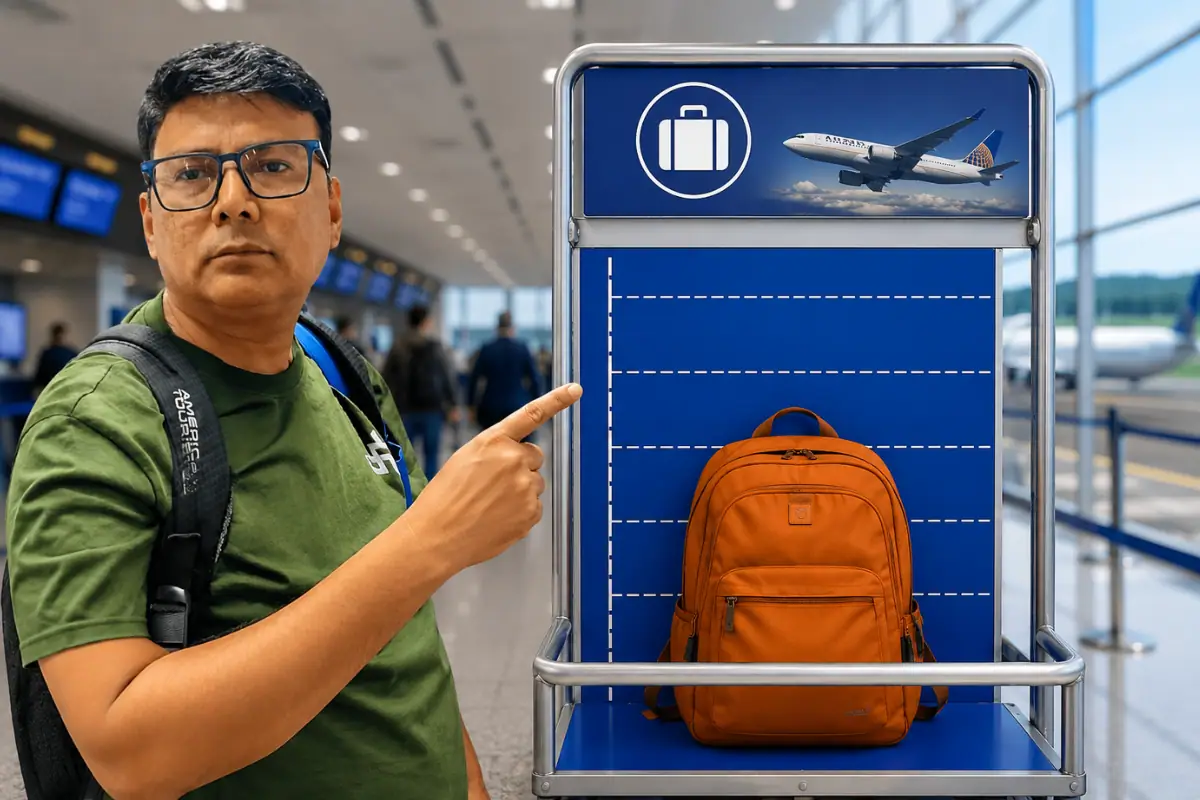
You’re at the gate, boarding pass in hand, coffee in the other, and a gate agent flags your bag. It’s too big. Or too heavy. Or it doesn’t meet a size limit you didn’t realize was being enforced this strictly. Suddenly, you’re scrambling for a credit card, watching other passengers file past you, and your relaxing trip is already off to a terrible start.
This is exactly the situation thousands of travelers are walking into in 2026 — and most of them assume TSA changed the rules. It didn’t. What actually changed is enforcement: airlines are measuring bags at the gate far more consistently than they used to. Separately, TSA does have its own security rules — liquids, batteries, prohibited items, ID — and a few of those genuinely have new wrinkles worth knowing about in 2026.
Here’s the full breakdown — TSA’s actual security rules, and each airline’s carry-on size and weight limits — for both US domestic and international carriers (Ryanair, EasyJet, Lufthansa, and more) — because if you’re flying overseas even once this year, the US-only numbers below won’t save you at that gate.
TSA Rules vs. Airline Rules — Know the Difference
Most of the confusion around “new 2026 rules” comes from lumping two completely different systems together.
TSA controls security screening — what you’re allowed to bring through the checkpoint. That’s liquids (the 3-1-1 rule), batteries, prohibited items, and identification requirements like Real ID.
Airlines control your bag itself — carry-on size, weight, personal item dimensions, and gate-check fees. TSA has no say in any of this. Each airline sets and publishes its own limits, and American, Delta, United, JetBlue, and Alaska all independently landed on roughly the same number: 22 x 14 x 9 inches, wheels and handles included.
Neither TSA nor the airlines rewrote these limits for 2026. The dimensions are the same ones that have applied for years. What’s actually different is stricter, more consistent gate enforcement of existing airline limits — plus a handful of genuinely new TSA-side items, like Real ID’s full enforcement and the rollout of Confirm.ID. We’ll flag each one clearly as we go.
Quick Summary: New Carry-On Rules 2026 at a Glance
Here’s everything you need to know, condensed:
Carry-on size and weight limits haven’t changed — but airlines are enforcing them far more strictly at the gate in 2026, measuring bags with sizers instead of eyeballing them. Personal items are now getting the same treatment.
Power banks must travel in the cabin. Liquids still follow the 3-1-1 rule, with a short exceptions list for medications, baby formula, and duty-free purchases. Gate-check fees for oversized bags can be steep. CT scanners and biometric tech are expanding at airports. U.S. travelers must carry Real ID-compliant identification or a passport for domestic flights.
Key changes at a glance:
- Carry-on max size: ~22 × 14 × 9 in (handles and wheels included) — Southwest allows up to 24 × 16 × 10 in; international carriers are usually smaller (check the IATA 55 × 35 × 20 cm guideline)
- Weight limits: 17–22 lbs, actively enforced on international routes; most US domestic carriers still don’t weigh carry-ons
- Personal items: measured, not eyeballed
- Power banks: carry-on only, no exceptions
- Real ID: required for U.S. domestic flights
- Gate-check fees: $50–$150+ if your bag doesn’t comply

What Changed Under The New Carry-on Rules
Standard carry-on dimensions haven’t shifted for years among major U.S. carriers. Whether you are flying with American, Delta, United, JetBlue, or Alaska, the magic numbers remain 22 x 14 x 9 inches. Staying within this universal limit is the only way to guarantee your bag passes the sizer at almost any domestic gate.
This quick comparison shows the familiar numbers and why travelers are still getting surprised.
| Airline | Published carry-on size | What agents are checking more closely |
|---|---|---|
| American | 22 x 14 x 9 in | Full exterior size, including wheels, handles, and bulging pockets |
| Delta | 22 x 14 x 9 in | Full exterior size when packed |
| United | 22 x 14 x 9 in | Full exterior size and fit in the sizer |
| JetBlue | 22 x 14 x 9 in | Full exterior size, not interior capacity |
| Alaska | 22 x 14 x 9 in | Full exterior size, including anything that sticks out |
| Southwest | 24 x 16 x 10 in | Slightly more lenient than the “big 5,” but still measured at the gate — don’t assume it means loose enforcement |
| Frontier / Allegiant (budget) | 18 x 14 x 8 in personal item free; larger bag needs paid carry-on | Strictest gate sizers of any US carriers — physical box, no exceptions |
International & Budget Airlines Comparison
If you’re connecting through Europe or flying a low-cost international carrier, the “22 x 14 x 9” rule doesn’t apply. Here’s the real picture:
| Airline | Carry-On Size | Personal Item |
|---|---|---|
| Lufthansa / Swiss / Austrian | 55 x 40 x 23 cm (8 kg) | 40 x 30 x 10 cm |
| Ryanair (Priority) | 55 x 40 x 20 cm | 40 x 30 x 20 cm (no priority: personal item only) |
| EasyJet | 56 x 45 x 25 cm | 45 x 36 x 20 cm |
| Air France | 55 x 35 x 25 cm (approx.) | 40 x 30 x 15 cm |
If you’re wearing a smartwatch or medical device, TSA screening rules differ — see our TSA wearable device rules 2026 breakdown.
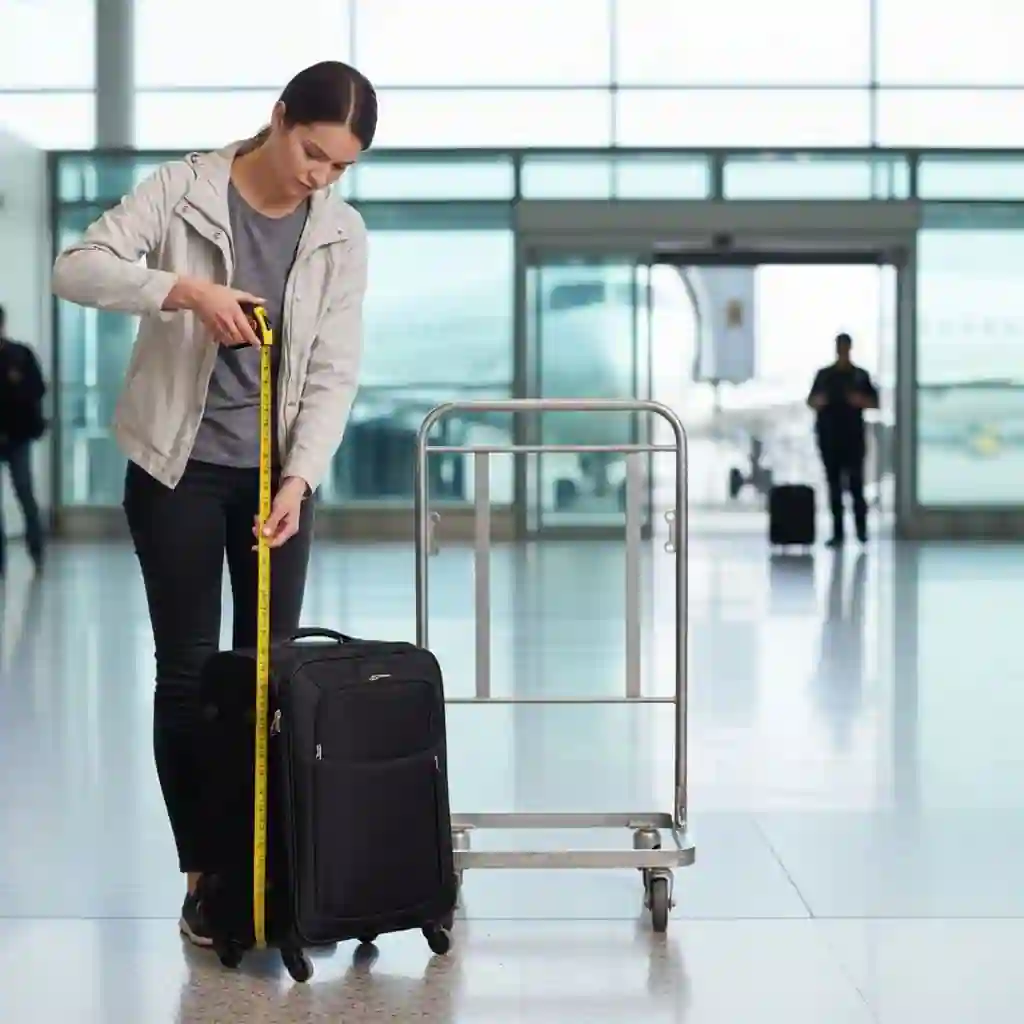
IATA’s own universal cabin-bag guideline is 55 x 35 x 20 cm — smaller than the US 22 x 14 x 9 standard. If you fly both domestic and international routes, pack to the smaller international number so you’re never caught out.
If you’re wearing a smartwatch or medical device, TSA screening rules differ — see our TSA wearable device rules 2026 breakdown.
The takeaway is simple. The published number stayed the same, but gate enforcement got tighter. That metal sizer frame by the podium is no longer background furniture. Agents are using it, and bags that looked fine in past years are failing once wheels, retractable handles, and overfilled outer pockets enter the picture.
Interior space does not matter. What matters is the bag’s full outside footprint when it is packed the way you plan to travel. A suitcase can look carry-on sized on a website and still fail in person because the handle does not sit flat or the front pocket bulges.
American Airlines has also started removing gate sizers at some airports — which sounds like good news, but it actually shifts the decision to agent discretion, and more travelers are being gate-checked as a result, not fewer.
Measure your bag when it is packed, not when it is empty. Wheels, handles, and stuffed pockets count.
Before you leave for the airport, do a real test at home:
- Extend the handle and make sure it retracts fully.
- Fill every pocket you plan to use.
- Pack the bag exactly as you will fly with it.
- Measure the outside only, not the interior space.
If your bag is close to the limit at home, treat it as over the limit at the airport.
👉 Read this detailed guide: Carry-On Luggage Size Guide for U.S. Airlines (2026): Avoid Fees & Know Exact Limits
Carry-On Weight Limits: Airlines Are Weighing Bags Now
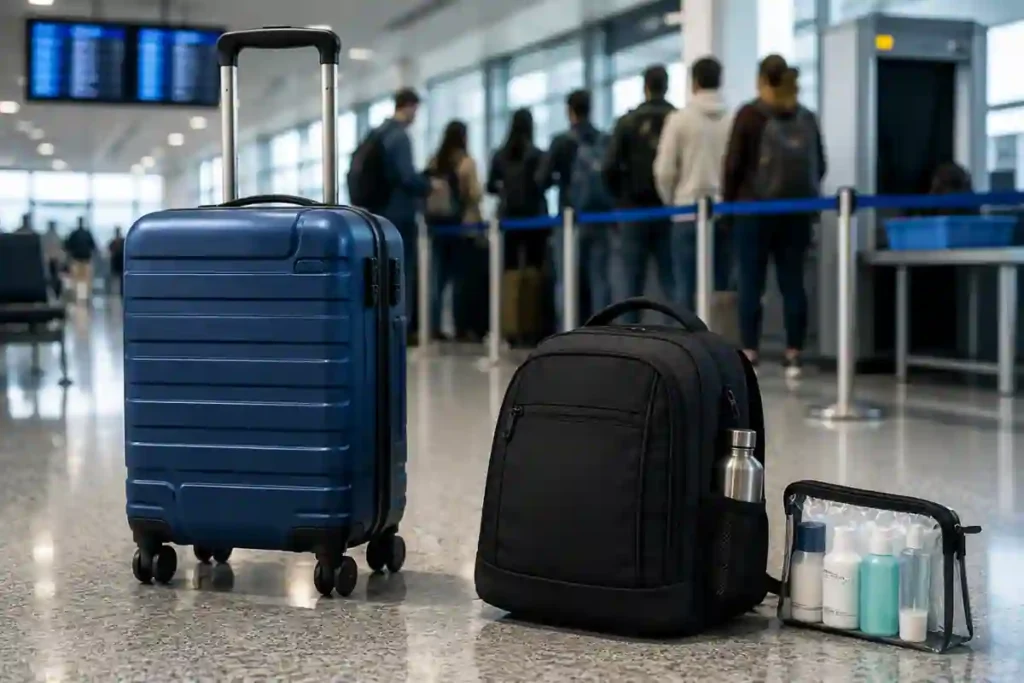
Weight limits have been on the books for years, but many airlines treated them like suggestions. That’s changing in 2026.
Most carriers enforce a carry-on weight limit somewhere between 17 and 22 lbs (roughly 8–10 kg). Some budget airlines and international carriers are even stricter, and a few are now combining your carry-on and personal item into a single total weight allowance.
That means your 15 lb roller bag and your 8 lb “personal item” backpack? Together, you might already be over the limit before you’ve added your laptop and water bottle.
What to do: Grab a luggage scale (they’re under $15 on Amazon) and weigh everything at home. It takes two minutes and can save you $75 at the gate.
Personal Item Rules: They’re Measuring Now, Not Guessing
A “personal item” — the smaller bag that goes under the seat in front of you — has always had size restrictions. But at most airports, enforcement was essentially an eyeball test: does it look too big? No? Fine, go ahead.
That casual approach is going away.
In 2026, airlines and airports are measuring personal items with the same rigor as carry-ons. An overstuffed backpack that used to pass as a “personal item” may now get pulled and charged.
Common personal item limits run around 18 × 14 × 8 inches, but this varies by airline. The key rules to know:
- One personal item per passenger — multiple small bags won’t fly (pun intended)
- It must fit under the seat, not in the overhead bin
- If it’s stuffed and bulging, it may fail the measurement sizer
Use a structured bag — not a floppy tote you can jam extra stuff into — and you’ll have far fewer problems.
👉 Check out this guide: The 7 Best Under-Seat Bags (Personal Item Size) | Tested on 20 Airlines
Battery and Electronics Rules: Know Before You Pack
This one trips up even experienced travelers. Here’s the short version:
Power banks and lithium batteries must go in your carry-on — never in checked luggage.
This isn’t a suggestion. Lithium batteries in the cargo hold are a fire risk, and airlines treat violations seriously. If a TSA agent or airline staff finds a large power bank in your checked bag, it will be removed (and you may face additional scrutiny).
There’s another wrinkle: smart luggage. Those bags with built-in USB chargers and GPS trackers? If the battery can’t be removed, many airlines will refuse to carry the bag in the cabin or in the hold. Always check whether your smart luggage has a removable battery before you fly.
Other electronics reminders:
- Laptops still come out for standard security lanes
- CT scanner lanes (more on that below) allow laptops to stay in your bag
- Spare lithium batteries go in carry-on, seated in a protective case
Also Read :- TSA Wearable Device Rules 2026: Apple Watch, CGM, Insulin Pump, Smart Ring — Everything You Need Before You Fly
What’s Not Allowed at All: Prohibited Items
Beyond batteries and liquids, TSA’s checkpoint list still catches thousands of travelers a year with items they didn’t think twice about:
- Sharp objects: knives of any blade length, box cutters, razor blades (outside a cartridge)
- Sporting goods: baseball bats, golf clubs, hockey sticks, ski poles — checked bag only
- Tools over 7 inches: wrenches, screwdrivers, drills
- Firearms and ammunition: must be declared, unloaded, and checked in a locked hard-sided case — never in carry-on
- Self-defense sprays: one 4 oz container is allowed in checked baggage only, with the safety mechanism secured
Not sure about something specific? TSA’s “Ask TSA” tool on X/Twitter and their app both give same-day answers — faster than guessing and getting stopped at the checkpoint.
The Liquid Rules Haven’t Changed — But They Still Catch People Off Guard
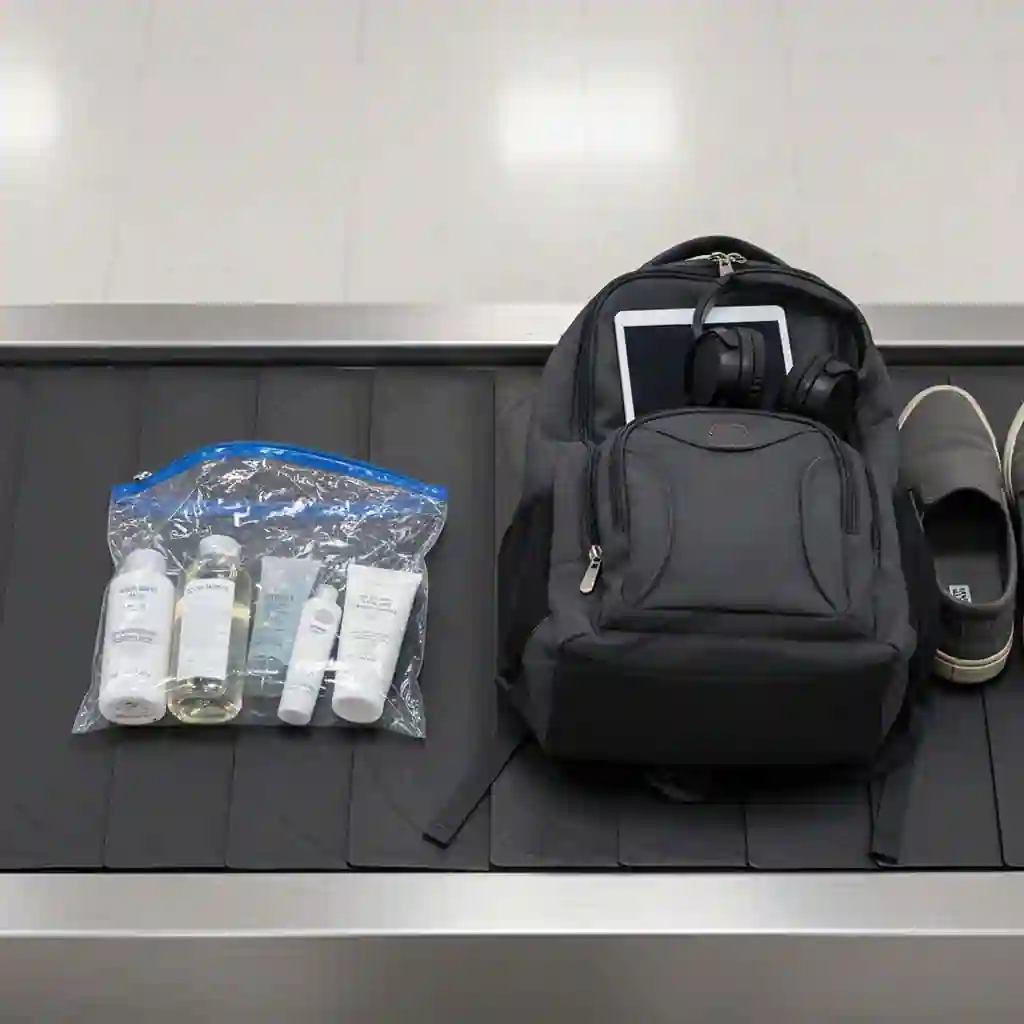
The 3-1-1 rule is still in full effect:
- Each liquid container must be 3.4 oz (100 ml) or smaller
- All liquids go in one quart-sized clear zip-top bag
- Each passenger gets one bag
This rule has been around since 2006, and yet it remains one of the top causes of security delays. TSA confiscates millions of bottles of shampoo, sunscreen, and yes — expensive perfume — every single year.
Pack your liquids the night before. Put the quart bag near the top of your carry-on so it’s easy to pull out at security. Don’t be the person holding up the line at 6 AM.
Gate Checks and Fees: The New Financial Surprise
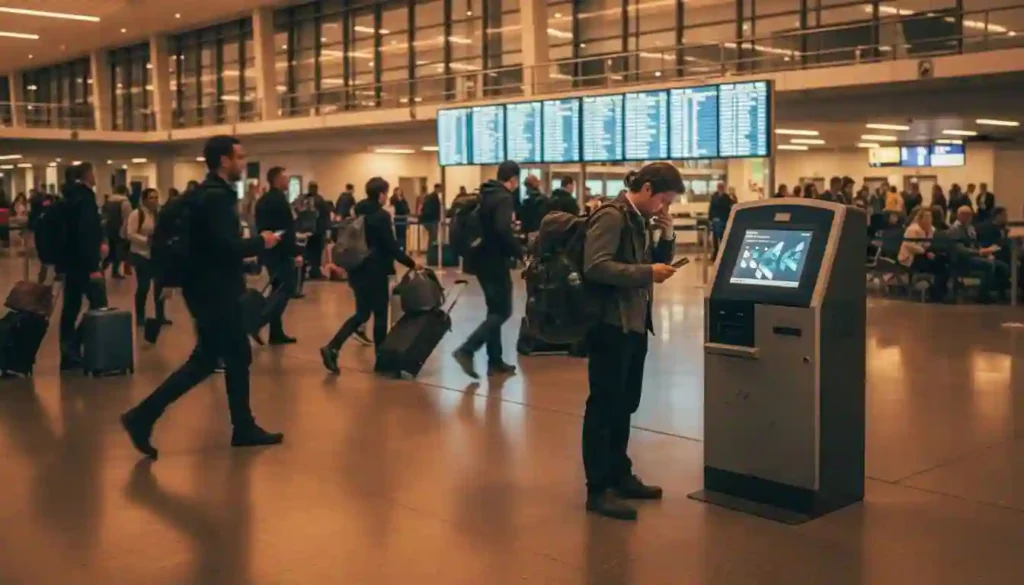
Here’s where the new enforcement really stings your wallet.
If your bag doesn’t meet the new carry-on size or weight requirements at the gate, you’ll be asked to check it — right then and there. And gate-check fees are typically higher than what you’d pay if you checked the bag at the counter when you arrived.
Depending on the airline, that surprise gate-check fee can run anywhere from $50 to $150 or more, one way. On a round trip, that’s suddenly a significant travel expense you hadn’t budgeted for.
The agents aren’t trying to ruin your day. But with stricter enforcement policies from airline management, they don’t have much wiggle room either. The time to deal with your bag isn’t at the gate — it’s at home.
New Security Tech: Scanners Are Getting Smarter
Airport security isn’t just stricter about bags — it’s technologically smarter.
CT (computed tomography) scanners are being rolled out at more airports. These machines create detailed 3D images of bag contents, which means TSA agents can see what’s inside your bag more clearly than ever — without you needing to remove your laptop or your liquids at some lanes.
What this means for you: fewer delays if your bag is organized and compliant. More delays if you’re trying to sneak something past the scanner, because they will see it.
Biometric ID checks are also expanding at major U.S. airports — facial recognition at boarding gates is becoming standard at busy hubs. You don’t have to opt in, but it speeds up the boarding process for those who do.
Real ID Rules: Is Your Driver’s License Enough?
If you’re flying domestically in the United States, this one is critical.
The Real ID Act is now fully enforced. That means your state-issued driver’s license needs to have a gold or black star in the upper corner to be accepted at TSA checkpoints. If yours doesn’t have that star, you’ll need to show a U.S. passport or another accepted federal ID.
Many travelers are still carrying non-compliant licenses without realizing it — and finding out at the security checkpoint is a terrible moment.
Quick check: Look at your driver’s license right now. No star? Get it updated before your next trip, or carry your passport as backup.
Your 2026 Travel Checklist: Do This Before Every Flight
- Measure your carry-on — including wheels and handles
- Weigh your carry-on at home with a luggage scale
- Make sure your personal item fits under-seat dimensions
- Move all power banks and lithium batteries to your carry-on
- Check whether your smart luggage battery is removable
- Pack liquids in a single quart-sized bag — accessible at the top
- Check your driver’s license for a Real ID star (U.S. travelers)
- Know your airline’s specific size and weight limits — they vary
Quick Summary: New Carry-On Rules 2026 at a Glance
Here’s everything you need to know, condensed:
Airlines are enforcing stricter carry-on rules in 2026, including tighter size limits that now count wheels and handles, stricter weight enforcement, and measured personal item checks.
Power banks must travel in the cabin. Liquids still follow the 3-1-1 rule. Gate-check fees for oversized bags can be steep. CT scanners and biometric tech are expanding at airports. U.S. travelers must carry Real ID-compliant identification or a passport for domestic flights.
Key changes at a glance:
- Carry-on max size: ~22 × 16 × 9 in (handles and wheels included)
- Weight limits: 17–22 lbs, now actively enforced
- Personal items: measured, not eyeballed
- Power banks: carry-on only, no exceptions
- Real ID: required for U.S. domestic flights
- Gate-check fees: $50–$150+ if your bag doesn’t comply
Frequently Asked Questions
What Are the New Carry-on Rules in 2026?
Airlines are enforcing stricter size limits (typically 22 × 16 × 9 inches, including wheels and handles), tighter weight limits (8–10 kg / 17–22 lbs), and measured personal item checks. New scanner technology makes enforcement more consistent than before.
Can Airlines Reject my Carry-on at The Gate in 2026?
Yes. If your carry-on doesn’t meet the airline’s size or weight requirements, gate agents can require you to check it on the spot — and charge a gate-check fee, which is often more expensive than standard checked baggage fees.
Do Wheels and Handles Count in Carry-on Size Measurements?
Yes. In 2026, most airlines measure your bag’s total dimensions, including the wheels and the extended handle. Make sure your bag fits within the limit when fully extended.
What is the Personal Item Size Limit?
Personal item limits vary by airline but typically run around 18 × 14 × 8 inches. Your bag must fit under the seat in front of you. Overstuffed or oversized personal items may now be flagged and charged.
Are Power Banks Allowed in Checked Bags?
No. Power banks and spare lithium batteries must be carried in your carry-on. They are prohibited in checked luggage due to fire risk. This rule applies regardless of capacity.
What happens if My Bag Fails to Meet the Carry-on Size Requirements at the Gate?
You’ll be required to check the bag, often on the spot. Expect a gate-check fee ranging from $50 to $150 or more, depending on the airline and route.
Do I need a Real ID to fly domestically in the U.S.?
Yes. Since the Real ID Act is now fully enforced, your driver’s license must have a gold or black star to be accepted at TSA. If yours doesn’t, bring a U.S. passport or other approved federal ID.
Has the TSA Liquid Rule Changed for 2026?
No. The 3-1-1 rule still applies — containers must be 3.4 oz (100 ml) or smaller, all in one quart-sized clear zip-top bag per passenger. CT scanner lanes at some airports allow you to leave liquids in your bag, but when in doubt, pull them out.
Is Southwest’s carry-on size the same as other airlines?
No. Southwest allows a larger carry-on — 24 × 16 × 10 inches — compared to the 22 × 14 × 9 inch standard used by American, Delta, United, JetBlue, and Alaska. It’s one of the few US carriers with a more generous allowance.
What’s the carry-on size for international flights?
It varies by carrier and region. IATA’s universal guideline is 55 × 35 × 20 cm, but European carriers like Lufthansa (55 × 40 × 23 cm) and budget airlines like Ryanair (55 × 40 × 20 cm) each set their own limits — always check the specific airline before flying internationally.
The Bottom Line
The rules themselves haven’t completely changed — but the way they’re being enforced has. Airlines and airports are done looking the other way, and new technology means there are fewer gaps to slip through.
The good news? None of this is hard to handle once you know what to expect. Measure your bag. Weigh it. Check your ID. Keep your power bank in your carry-on. Stick to the quart bag for liquids.
Do that, and 2026 is just another year of smooth travel. Skip it, and you’re the person holding up the boarding line while an agent tags your bag for a $100 gate check.
Travel smarter. Prep at home. And actually enjoy getting on that plane.
Last updated: September 2026 | Sources: TSA.gov, FAA guidance, IATA cabin baggage guidelines, individual airline policy pages — verified directly, not copied from aggregator sites
