

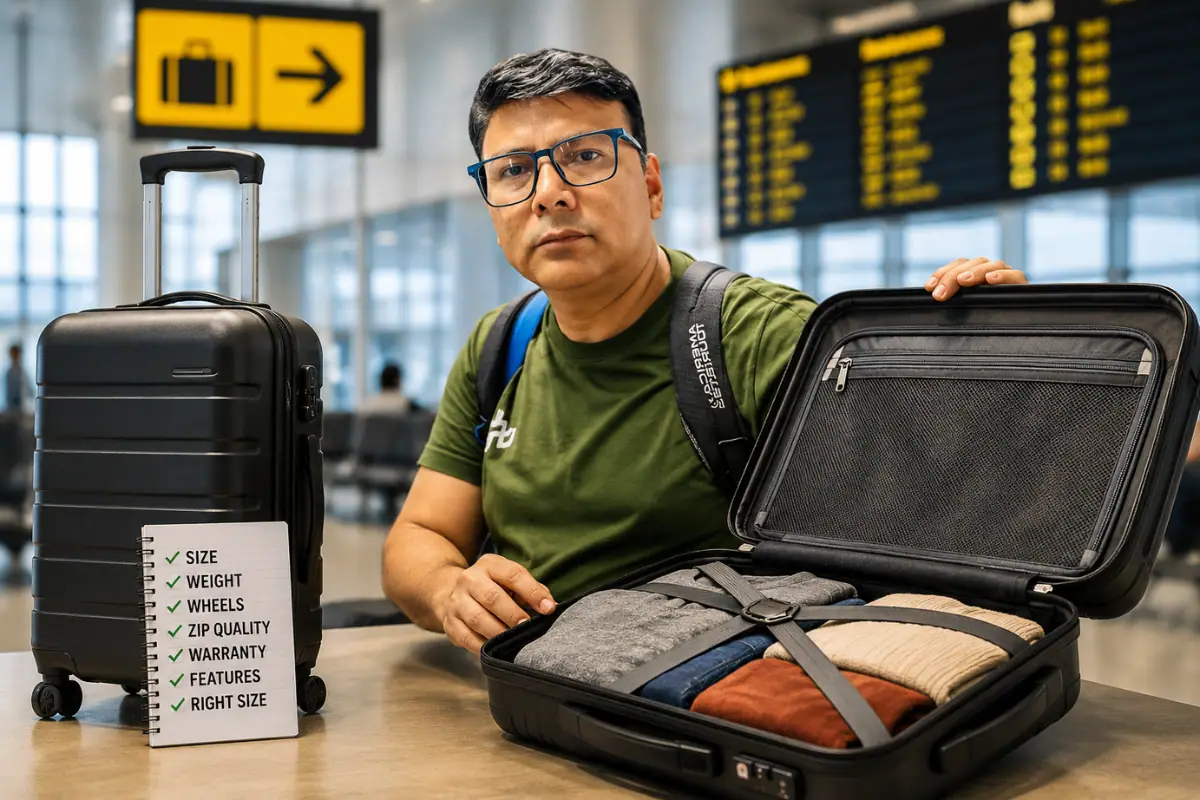
Most travelers make the same critical mistake when buying luggage. They don’t realize it until they’re standing at the check-in counter—$70 poorer and holding a bag that’s two inches too large to carry on. Here’s how to avoid that trap.
Luggage Buying Mistakes Every Traveler Makes
Bad luggage doesn’t just inconvenience you. It costs you real money — in checked bag fees, repair bills, and premature replacements — and turns already stressful travel days into genuinely bad ones. The frustrating part? Most of these purchases felt like good decisions in the store.
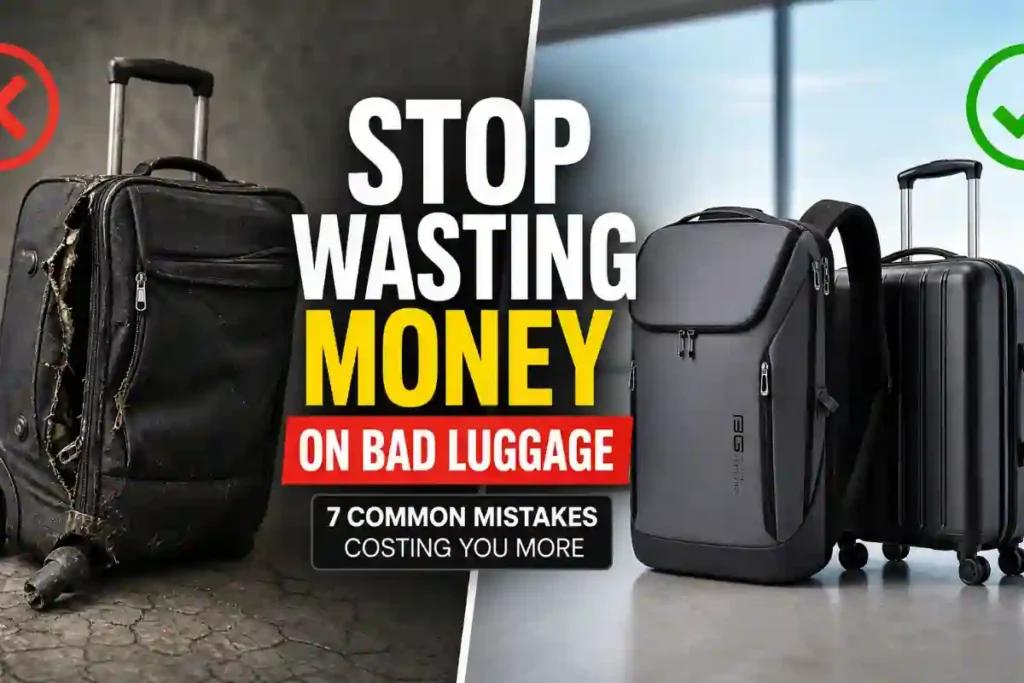
These seven luggage buying mistakes are the ones travelers make repeatedly. Each one is avoidable once you know what to look for.
Mistake #1: Choosing Luggage Based on Looks Alone
That sleek matte black hardshell looked incredible on the shelf. Clean lines, sharp color, modern finish. So you bought it — and didn’t check anything else. Then you found out the zippers were flimsy, the wheels dragged on anything except smooth tile, and the lining ripped after two months.
Luggage manufacturers know that aesthetics sell. A bag can look premium and perform terribly. Design and durability are not the same thing.
The fix: After you like how it looks, check zipper teeth — they should feel solid, not loose. Spin all four wheels and feel for resistance. Check shell thickness on a hardcase. Read reviews specifically mentioning durability after 6+ months of use, not just appearance.
Mistake #2 – Ignoring Airline Size Rules — the Most Expensive Luggage Buying Mistake
Standard carry-on size for most major US airlines is 22″ x 14″ x 9″. But budget carriers — and even some international routes on major airlines — enforce stricter limits. A bag that flies free on Delta might cost you $60 to gate-check on Spirit or Ryanair.
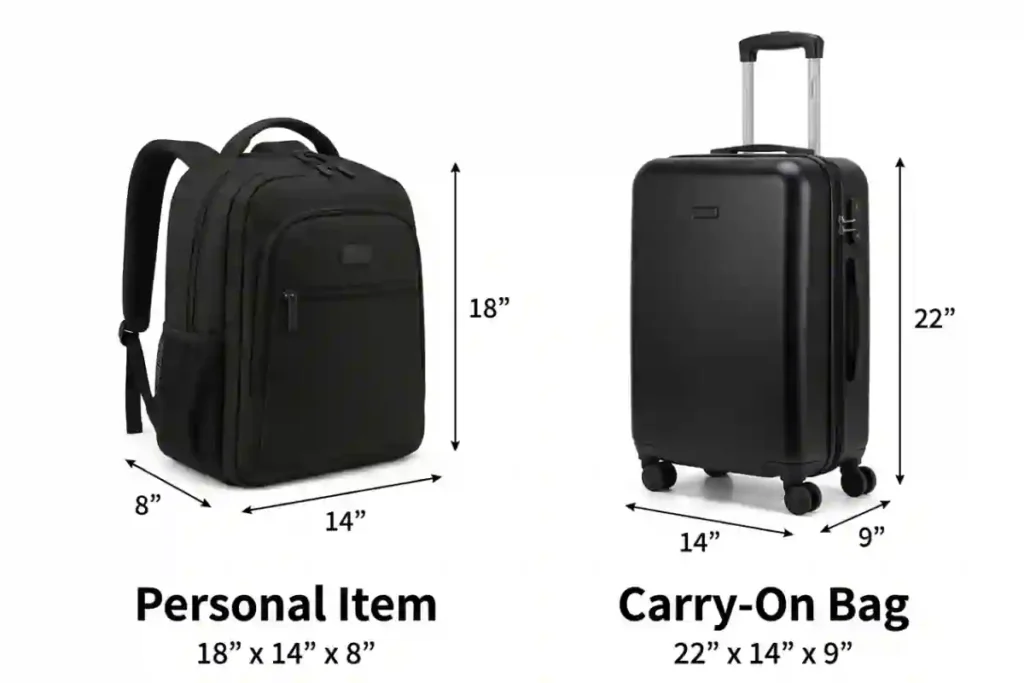
Real example – You buy a “carry-on” that measures 24 inches tall. It works fine on domestic flights because agents don’t always check. Then you take one international trip, the gate agent measures it, and suddenly you’re paying an overseas checked bag fee you didn’t budget for.
The fix – Before buying, check the size rules for the airlines you fly most. If you travel internationally or on budget carriers occasionally, err on the smaller side. Don’t trust “carry-on sized” printed on the tag — measure it yourself. Check the TSA carry-on guidelines and your airline’s official baggage policy.
Also Read: – Personal item size guide 2026 – Which bags fit under every major airline’s seat.
Mistake #3 -Buying Heavy Luggage
Empty weight matters more than most people think. A carry-on that weighs 9 lbs before you’ve packed a single thing leaves you with maybe 6–7 lbs of wiggle room on a 15 lb airline limit. Add your laptop, shoes, and a few days of clothes, and you’re already over — or cramming less than you need.
Heavy empty bags compound at every stage: harder to lift into overhead bins, tiring on long terminal walks, and on weight-restricted airlines, they genuinely limit what you can bring.
The fix – Aim for a carry-on under 7 lbs empty, and under 8 lbs for a larger checked bag. Check the listed weight in the product specs before purchasing. Polycarbonate hardshells and ripstop nylon softshells tend to be the lightest options at any price point.
Mistake #4 – Not Testing the Wheels Before You Buy
Wheels are the one component you’ll use on every single trip, across every surface — airport tile, sidewalk cracks, cobblestone streets, parking lots. They fail more often than any other part of a suitcase. And most people never test them in-store.
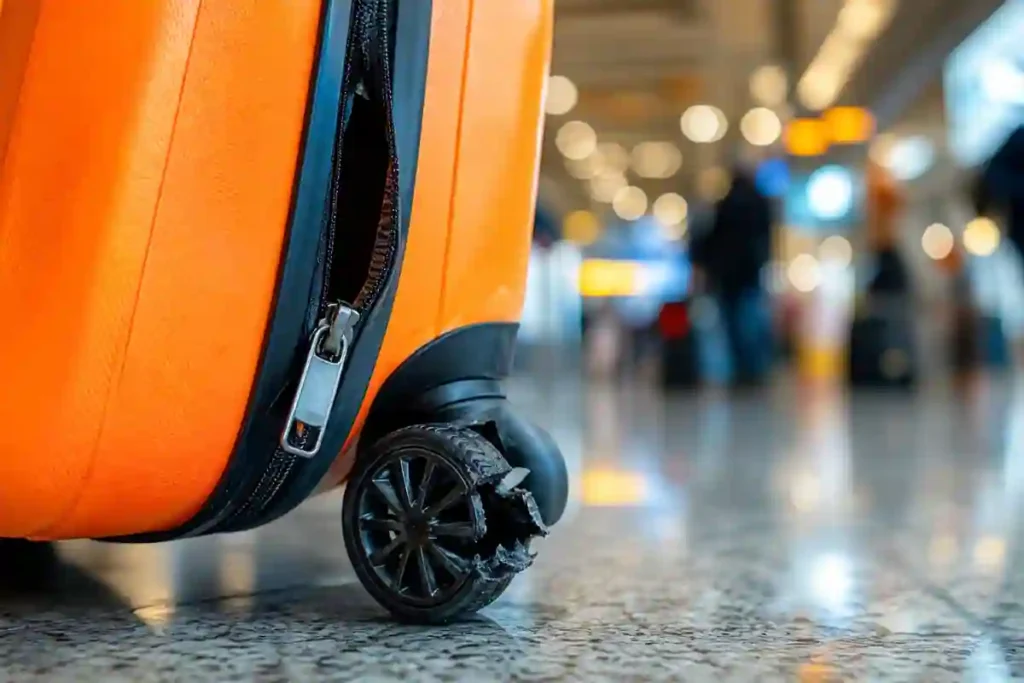
Real example -You buy a bag with four spinner wheels. They glide beautifully on the smooth showroom floor. Three months later, one wheel locks up on a concrete sidewalk, and you’re dragging a tilted suitcase through a crowded terminal.
The fix– In-store, push the bag in all directions — wheels should roll smoothly with zero wobble. Look for double spinner wheels; they’re more stable and last longer than single wheels. If buying online, filter reviews by “6 months” or “1 year” to find wheel longevity feedback specifically.
Mistake #5 – Overpaying for Features You’ll Never Use
Some bags come loaded: built-in garment folders, USB charging ports, combination locks, compression systems, removable packing organizers, and built-in scales. Features that look compelling in a product video — and get used once, if ever.
Every extra feature adds cost, weight, and potential failure points. A built-in USB port sounds great until the internal wiring snags and you’re paying to repair a bag that would’ve been fine without it.
The fix: Be honest about how you actually travel. If you’ve never used a garment folder, you don’t need one built into your bag. If you already own a portable charger, a USB pass-through is redundant. Start with features you know you use, and only pay for those.
Mistake #6 – Skipping the Warranty Check
Luggage takes a beating. Handlers throw it, overhead bins crush it, wheels crack on rough surfaces. A bag without a solid warranty means you absorb that cost personally every time something breaks. Most casual buyers don’t even glance at the warranty terms.
Real example: You spend $180 on a mid-range suitcase. After 14 months, the handle mechanism breaks. No warranty coverage. A replacement handle costs $40 in parts plus $60 at a repair shop. You’re now $280 into a $180 bag.
The fix: Look for a lifetime warranty or, at a minimum, a 10-year warranty before buying. Travelpro, Briggs & Riley, and Samsonite all offer strong coverage. Briggs & Riley is the standout — they cover damage caused by airlines, which is rare and genuinely valuable. A good warranty is a direct signal of how confident the manufacturer is in their own product.
Mistake #7 – Buying the Wrong Size for How You Actually Travel
This cuts both ways. Some people buy a giant 30-inch checked bag for weekend trips and end up overpacking every time. Others buy a compact carry-on for two-week international trips and spend the whole time rewearing clothes or paying to ship things home.
The wrong size doesn’t just cause inconvenience — it changes how you travel. A bag that’s too big encourages overpacking, which means more weight, slower movement, and higher fees. Too small means stress-packing and leaving things behind.
| Trip length | Recommended size |
|---|---|
| Weekend to 4 days | 20–22″ carry-on |
| 5–7 days | 24–25″ medium checked or 40–45L carry-on backpack |
| 7–14 days | 25–28″ checked bag |
| Long-term travel | Carry-on + personal item (two bags instead of one oversized) |
The fix: Match the bag to your most common trip length, not your longest one. If you’re between sizes, go smaller. You’ll pack lighter, move faster, and skip the baggage claim line.
🎒Best personal item backpacks for 2026 →Under-seat bags tested across 15 airlines
Editor’s Picks · 2026 How to Choose the Right Luggage: Our Top Picks
Finding a bag that passes the “checklist” isn’t just about reading a tag—it’s about real-world performance. We’ve field-tested dozens of bags on cobblestones, budget airline sizers, and overhead bins.
Based on our 2026 testing, these are the bags that actually deliver on their promises.
Disclosure: We may earn a commission on purchases made through Amazon links at no extra cost to you.

Travelpro Maxlite 5 Carry-On
- ✓ 5.8 lbs empty
- ✓ Double spinner wheels
- ✓ Lifetime warranty
- ✓ Fits most airline sizers

AmazonBasics Hardside Spinner
- ✓ 6.9 lbs empty
- ✓ Spinner wheels
- ✓ TSA-approved lock
- ✓ 1-year warranty
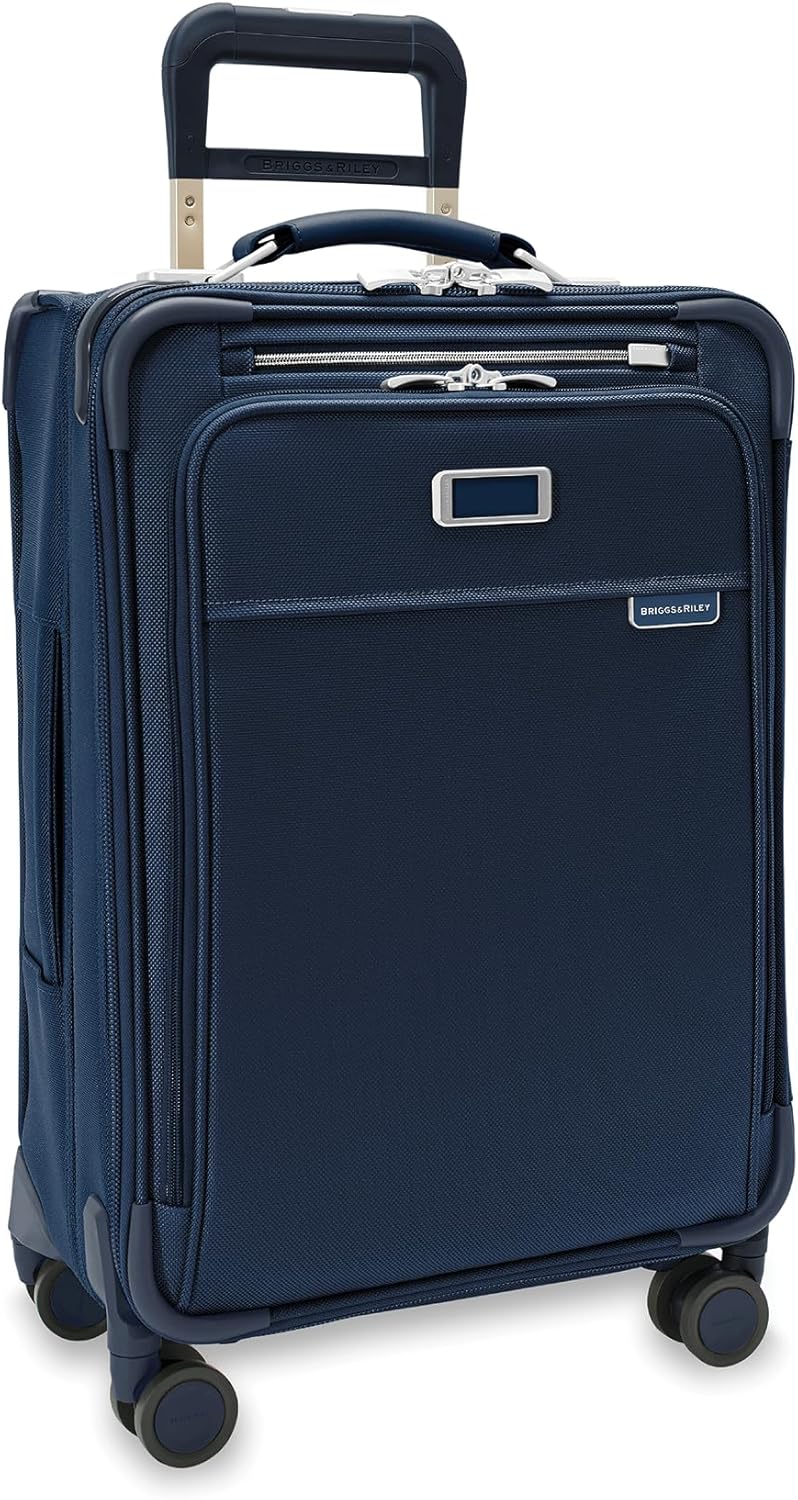
Briggs & Riley Essential 22″ Carry On
- ✓ 7.1 lbs empty
- ✓ Double spinner wheels
- ✓ Lifetime + airline damage
- ✓ Compression system

Pagosa Hardshell Expandable
- ✓ Lightweight design
- ✓ TSA combination lock
- ✓ 360° spinner wheels
- ✓ Expandable storage
Before You Buy: a Simple Luggage Checklist
- Does it meet the size rules for the airlines I fly regularly?
- How much does it weigh empty? (Target: under 7 lbs for carry-on)
- Are the wheels double-spoke, and do they roll smoothly in all directions?
- What’s the zipper quality — do the teeth feel solid with no play?
- What’s the warranty? (Look for lifetime or at least 10 years)
- Am I paying for features I’ll actually use, or just extras that add unnecessary weight?
- Does the size match my typical trip length — not my longest trip?
Frequently Asked Questions
What is the Biggest Mistake When Buying Luggage?
Choosing based on looks instead of durability and size compatibility. A bag can look premium and still have flimsy zippers, poor wheels, and no meaningful warranty — all things you won’t notice until you’ve already taken it on a trip.
How do I know if Luggage is Carry-on Size?
Check the specific airline’s rules — most US carriers allow 22″ x 14″ x 9″, but budget airlines like Spirit and Ryanair enforce stricter limits. Always measure the bag yourself, since tags can be inaccurate. If you’re unsure about airline limits, check our personal item size guide for 2026 for a full breakdown by carrier.
Is Hard or Soft Luggage Better?
Hard-shell luggage offers better protection for fragile items and is more water-resistant. Soft-shell luggage is generally lighter and more flexible, making it useful for cramming into tight overhead bins. For most travelers, a lightweight polycarbonate hardshell is the best balance of protection and weight. For frequent business travelers, a softshell with a built-in garment folder may be worth the trade-off.
What Luggage Brands Are Most Reliable?
Travelpro, Samsonite, and Briggs & Riley are consistently the most reliable brands based on long-term owner reviews and warranty quality. Briggs & Riley is the standout for serious travelers — they’re one of the only brands that covers airline-caused damage under their lifetime warranty.
Final Thoughts: Avoid these Luggage Buying Mistakes
The right luggage makes travel noticeably easier. The wrong luggage becomes a source of stress on every single trip — and usually ends up costing more than a better bag would have in the first place.
None of these luggage buying mistakes is immediately obvious. That’s exactly why so many travelers make them. Now that you know what to look for, you can skip the regret and buy something that actually holds up.
Take five extra minutes before you commit: check the weight, warranty, wheels, and size. It pays off for years of better travel.
